
How to Estimate a Roofing Job
FlyQuote Team · July 13, 2026
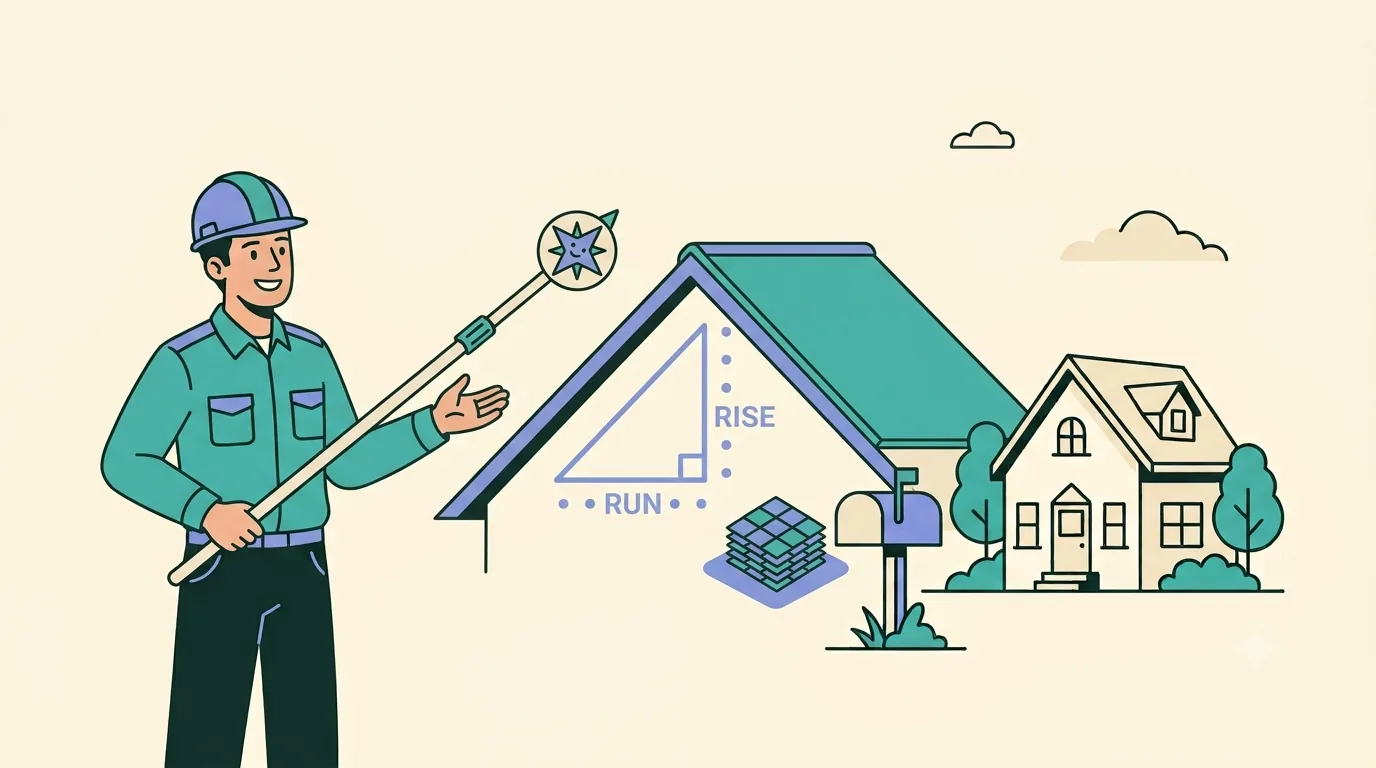
A roof estimate is mostly one number with three corrections applied to it. The number is squares. The corrections are pitch, waste, and whatever you find when the old material comes off. Contractors who quote roofs profitably are usually the ones who take the corrections as seriously as the measurement.
Start with squares, and get the pitch right
A roofing square is 100 square feet. Every material quantity and most labor pricing in the trade runs off it, so the estimate begins by working out how many you have.
The trap is that a footprint measurement is not a roof measurement. If you measure the building from the ground or off a satellite image, you have the horizontal area, and the actual roof surface is larger by a factor that depends on pitch. A 6/12 roof is roughly twelve percent larger than its footprint. A 12/12 is over forty percent larger. Pricing a steep roof off footprint area is not a small error, it's the whole margin.
Pitch does a second thing to the estimate, separately from area. Anything above about 7/12 slows the crew down and starts requiring staging, harnesses, and roof jacks. That's a labor multiplier on top of the area correction, and it needs to be its own adjustment rather than a vague sense that steep roofs cost more.
Count the layers before you price the tear-off
Tear-off is priced per square, and two layers is not twice the work of one, it's usually a bit less than double per square but far more disposal weight. Three layers means the decking underneath has been carrying more than it should for years, and you should price accordingly.
Disposal is the part that gets underestimated. Asphalt shingles are heavy, and a dumpster sized for a single-layer tear-off will not hold a double. Getting the container size wrong costs a second haul and a day of schedule.
Check for the layer count at a rake edge or by lifting a shingle near a vent rather than assuming from the customer's recollection. Homeowners are honestly unsure how many roofs are up there more often than not.
Waste factor is not padding
Every roof needs more material than its measured area, because shingles get cut at hips, valleys, and rakes and the offcuts are scrap. A simple gable roof with two planes might run seven to ten percent waste. A complex roof with multiple hips, valleys, dormers, and penetrations can run fifteen percent or more.
Architectural shingles on a cut-up roof waste more than three-tab on a simple one. If you're running the same waste percentage across every job regardless of complexity, you're overbuying on simple roofs and running short on complicated ones, and running short is the expensive direction because it means a supply run mid-install.
Price the parts of the roof that aren't shingles
The field is the easy part. What separates a complete estimate from an optimistic one is everything at the edges and penetrations, because that's where the labor concentrates and where leaks actually start.
- Underlayment, and whether code or the manufacturer requires ice and water shield at eaves and valleys
- Drip edge, starter strip, and ridge cap, all priced by linear foot rather than by square
- Step and counter flashing at walls and chimneys, plus pipe boots and vent flashing
- Ridge vent or other ventilation, which is often the code item that turns a repair into a bigger job
- Valley treatment, open or closed, which changes both material and labor
Decking is the honest unknown. You cannot see it until the old roof is off, and pricing as though it's all sound is how a profitable job turns into a break-even one. The standard approach is a unit price per sheet written into the estimate, so replacement is agreed in advance rather than negotiated on the day. A customer who signed a quote saying "decking replacement billed at X per sheet as needed" reacts very differently than one presented with a surprise.
Repair estimates are a different animal
A repair is not a small replacement. The cost driver is access and diagnosis rather than area, and a two-hundred-dollar shingle fix can carry the same setup, travel, and safety time as a much bigger job. Price the trip, not the square footage.
Storm and insurance work runs on its own clock as well. The scope has to line up with what the adjuster wrote, and supplements for items the adjuster missed are a normal part of the process rather than a sign something went wrong. The estimates that go smoothly are the ones with photographic evidence attached to every line, taken while you were up there rather than reconstructed later.
The measurement you took beats the one you remember
Most roofing estimates are built at a desk hours or days after the inspection. By then, the specifics have blurred. Which slope had the soft spot. Whether that was one layer or two. How many pipe penetrations there actually were. Every one of those gaps gets filled with an assumption, and assumptions in roofing default to optimistic.
Photos of every slope, the rake edge, the valleys, the flashing details, and any damage, taken while you're up there, are worth more than any pricing spreadsheet. If those photos and your notes can turn into a drafted scope with squares and materials already worked out, the estimate you review is grounded in the roof you actually looked at rather than the one you half remember.
You still set the price. The point is starting from what was there.
Ready to quote faster?
Create a free account and publish your first form today, no card required.
Sign up free