
How to Estimate a Fencing Job
FlyQuote Team · July 16, 2026
Fencing is the trade where flat-rate pricing is most tempting and most dangerous. A dollar figure per linear foot is easy to quote on the phone, easy for a customer to compare, and quietly wrong on any yard that isn't flat, clear, and rectangular. Which is most yards.
Linear feet is the start, posts are the cost
Measure the run, then work out post count rather than treating the fence as a continuous ribbon. Posts typically sit six to eight feet apart depending on material and wind load, and post count is what drives digging labor, concrete, and a large share of material cost.
Corners, ends, and gate posts are not the same as line posts. They carry more load, often go deeper, frequently need a larger diameter or heavier gauge, and take longer to set square. A yard with five corners costs more than a straight run of the same total footage, and a per-foot rate hides that completely.
Post depth follows frost line and local code, and in cold climates that can mean forty-two inches or more. That's not a detail, it's the difference between a manageable dig and a job that needs an auger and a much longer day.
Gates are their own line item
A gate is the most expensive few feet of any fence and the part most likely to generate a callback. Hardware, bracing, and the extra care needed to hang it so it still swings true in two years all cost real time. A double gate wide enough for a mower or a vehicle costs more again, and often needs a drop rod and a reinforced post pair.
Quote each gate separately with its width and hardware named. Customers routinely add a second gate mid-conversation, and a separated line makes that a thirty-second answer.
Slope is where the money goes
This is the adjustment that flat-rate pricing misses most often. On sloped ground you're choosing between two approaches, and they cost differently.
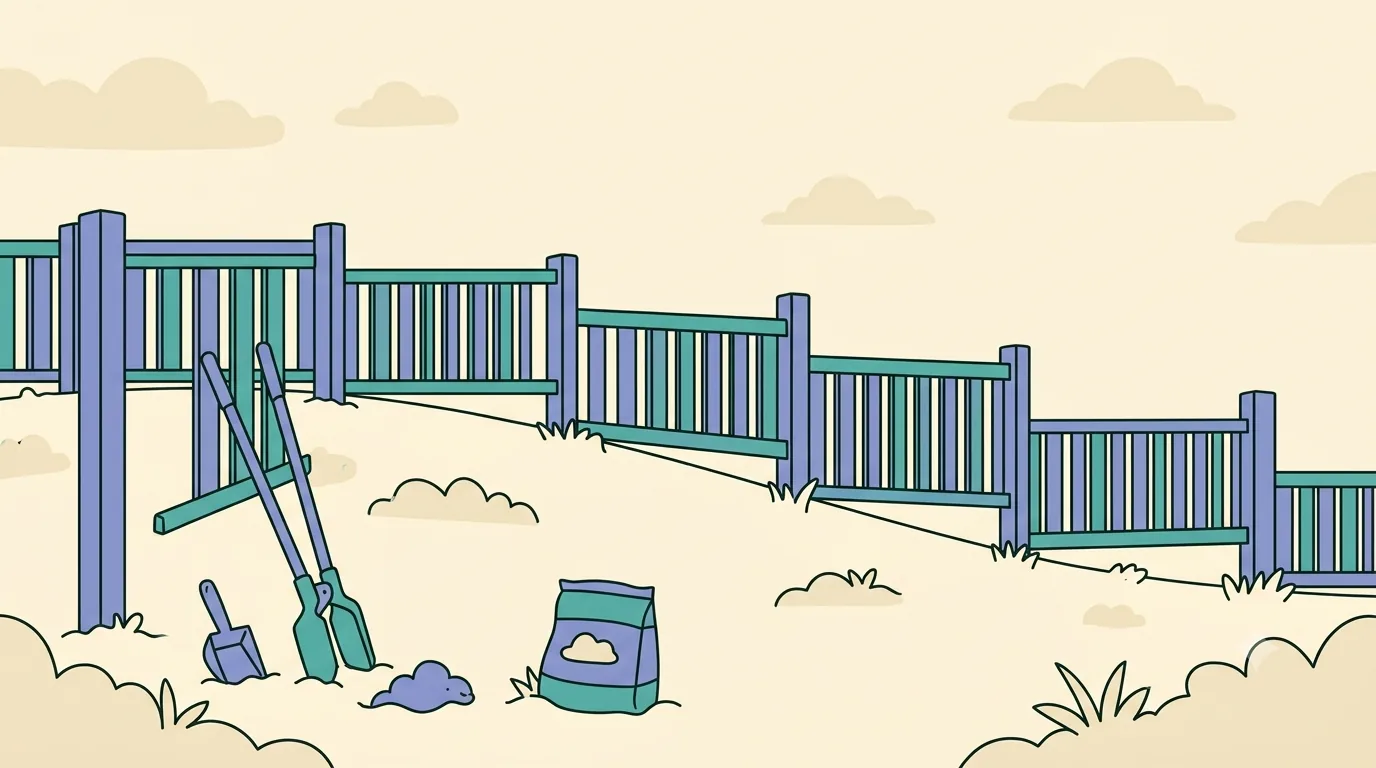
Stepping the fence keeps each panel level and drops it at each post, leaving triangular gaps at the bottom. It's faster with preassembled panels and looks deliberate on moderate grades. Racking, where the fence follows the slope, needs either racking-capable panels or stick-built construction where each picket is cut individually, and the latter is a great deal more labor.
Either way, a sloped run is not the same price as a flat run, and a photo of the grade tells you more than any description the customer gives over the phone. "It's a little uneven" covers everything from a gentle fall to a bank you'll be cutting steps into.
What's in the ground and in the way
Soil decides digging time. Sandy loam is quick. Heavy clay is slow. Rock means either a jackhammer, a rock auger, or a relocated post, and hitting it at post seven of thirty is a schedule event. Ask about the area's soil and look for exposed rock, but also accept that some of this is genuinely unknowable in advance, which is an argument for saying so in the quote rather than absorbing it.
- Tree roots along the line, which can force post relocation or hand digging
- Utility locates, which are legally required in most places and take lead time
- Irrigation lines and invisible dog fence wire, rarely mapped and easily cut
- Access for equipment, since a gate too narrow for the auger means digging by hand
- Existing landscaping or retaining walls the fence has to negotiate
Removal of an old fence is its own scope with its own disposal cost. Pulling posts set in concrete is significantly harder than pulling posts set in dirt, and the concrete footings have to go somewhere. Price demolition and haul-away as separate lines rather than absorbing them, because customers often decide to handle removal themselves once they see what it costs.
Material choice changes more than material cost
Wood, vinyl, aluminum, and chain link differ in purchase price, but they also differ in install labor, and the two don't move together. Preassembled vinyl panels go up fast once the posts are right, and are unforgiving if the posts are wrong, because there's no adjustment in the panel. Stick-built wood is slower but absorbs a crooked line and a sloped grade without complaint.
Wood also carries a species and grade decision the customer usually hasn't considered. Pressure-treated pine, cedar, and redwood sit at different price points and different lifespans, and quoting the cheapest without noting the difference invites a comparison against someone quoting the same thing.
Property lines are a real risk
A fence built a foot over the line is a legal problem, not a construction one, and the cost of moving it lands on whoever built it. Where the line is uncertain, the honest position is that a survey is the customer's responsibility and the quote assumes the line as marked. Put that sentence in writing. It costs nothing and it has saved fencing contractors a great deal.
The yard in the photos beats the yard in your memory
Fence estimates are usually written after the fact from a rough sketch and a total footage. What gets lost is exactly what drives the price: where the grade fell away, which corner had the tree, how narrow the side gate was, whether the old fence was set in concrete.
Walk the line, photograph the corners, the slope, the access, and the existing fence if there is one. An estimate drafted from that record prices the yard you measured. The one built from a number on a business card prices an imaginary flat rectangle, and the difference between those two shows up in your margins on exactly the jobs that were hardest to build.
Ready to quote faster?
Create a free account and publish your first form today, no card required.
Sign up free